The whitest sand in Indonesia
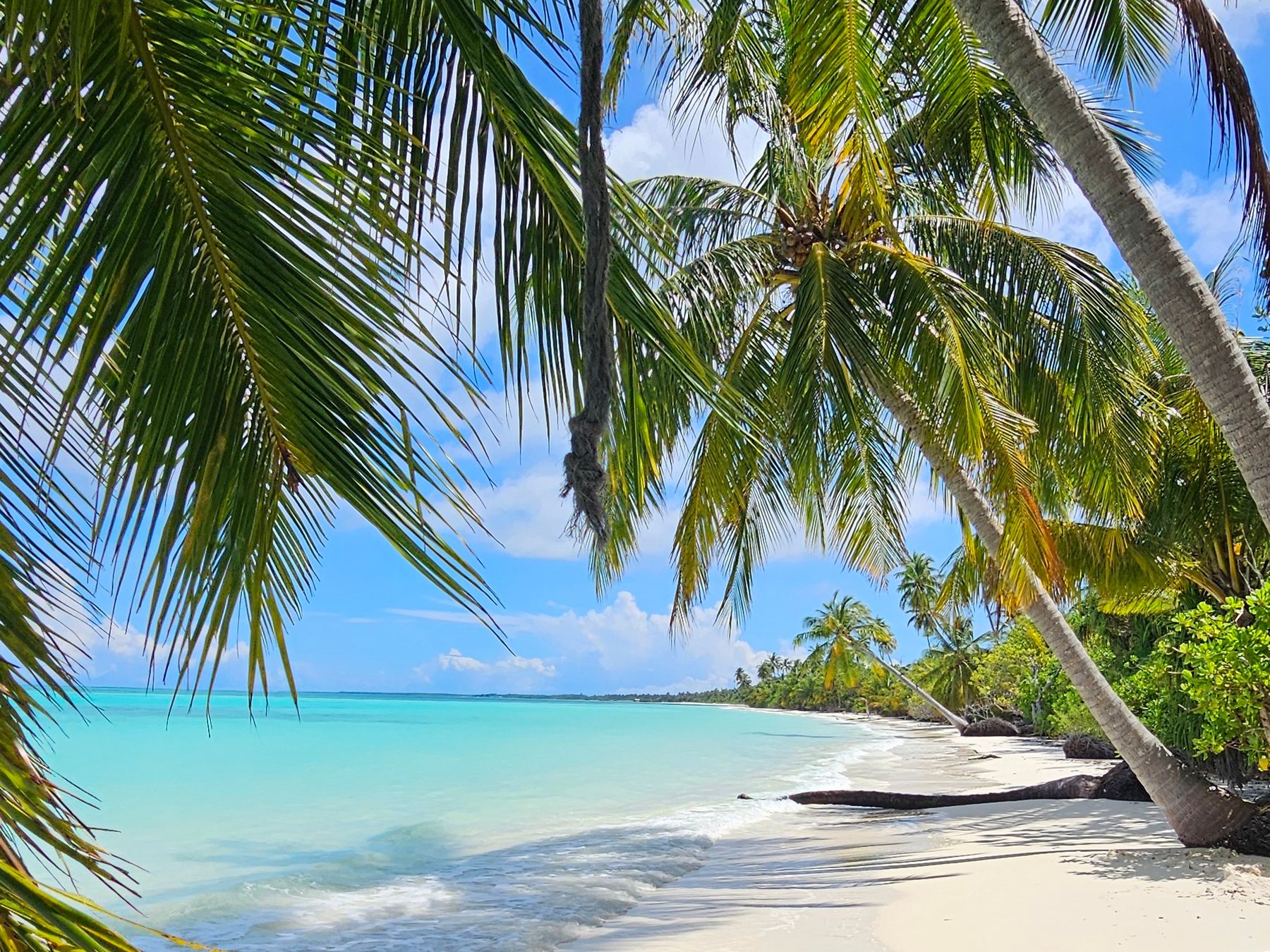
Pasir Panjang (‘long sand’) on Kei Kecil island is consistently rated the whitest sand beach in Indonesia by photographers and beach analysts. The sand is 99% calcium carbonate (crushed coral) with negligible silica content — the result is an almost surgical white that reflects sunlight intensely. The beach is 3 km long, fringed by coconut palms, and almost completely undeveloped. Two homestays sit at the southern end. There are no resorts, no commercial boats, no jetty infrastructure. The water is shallow and turquoise to 100m offshore.
Getting to the Kei Islands
Wings Air operates daily flights from Ambon to Tual (the Kei Islands airport) — 1.5 hours. Tual to Pasir Panjang is a 90-minute drive. There are no scheduled boat services from Ambon. The remote location keeps tourism small. Most travelers find the Kei Islands difficult to integrate into a tight Maluku itinerary — we offer them as a 4-day extension before or after the main voyage for guests who want a beach finale.
Marine life and snorkeling
Snorkeling at Pasir Panjang is shallow and easy. The reef sits 50m offshore and is healthy soft corals with reef fish at 3-8m. For divers, the offshore drop-off at Banda Eli (20 minutes by boat) is the recommended day trip — wall dives to 30m with reef sharks, eagle rays, and large schools of jacks. Visibility 25-35m year-round.
Where to stay
Two homestays operate on Pasir Panjang: Coaster Cottages and Savana Cottage. Both have 4-6 rooms, ensuite bathrooms, breakfast included. WiFi is unreliable — bring a 4G hotspot. Cash only — no ATMs on Kei Kecil; bring rupiah from Ambon. Booking via WhatsApp 2-3 weeks in advance is sufficient.
Best season
Year-round dry season (Kei Islands sit on the equator with limited monsoon influence). October to April has the calmest seas. May to September has slightly more wind but still excellent beach days. Pasir Panjang is south-facing and shaded by palms in the afternoon — comfortable through the hottest days.
Cultural notes
The Kei Islands are predominantly Catholic (a Dutch missionary legacy from the 1880s). The local language is Keiese, distinct from Ambonese. The community is welcoming but reserved — tourism is new and the local economic structure is still mostly subsistence fishing and copra. We recommend modest dress, evening modesty (no shouting on the beach after 9pm), and a non-extractive approach to interactions. Bring small gifts (notebooks for kids are appreciated; cash is not).